
How a Furniture 3D Rendering Project Works: From CAD File to Final Images
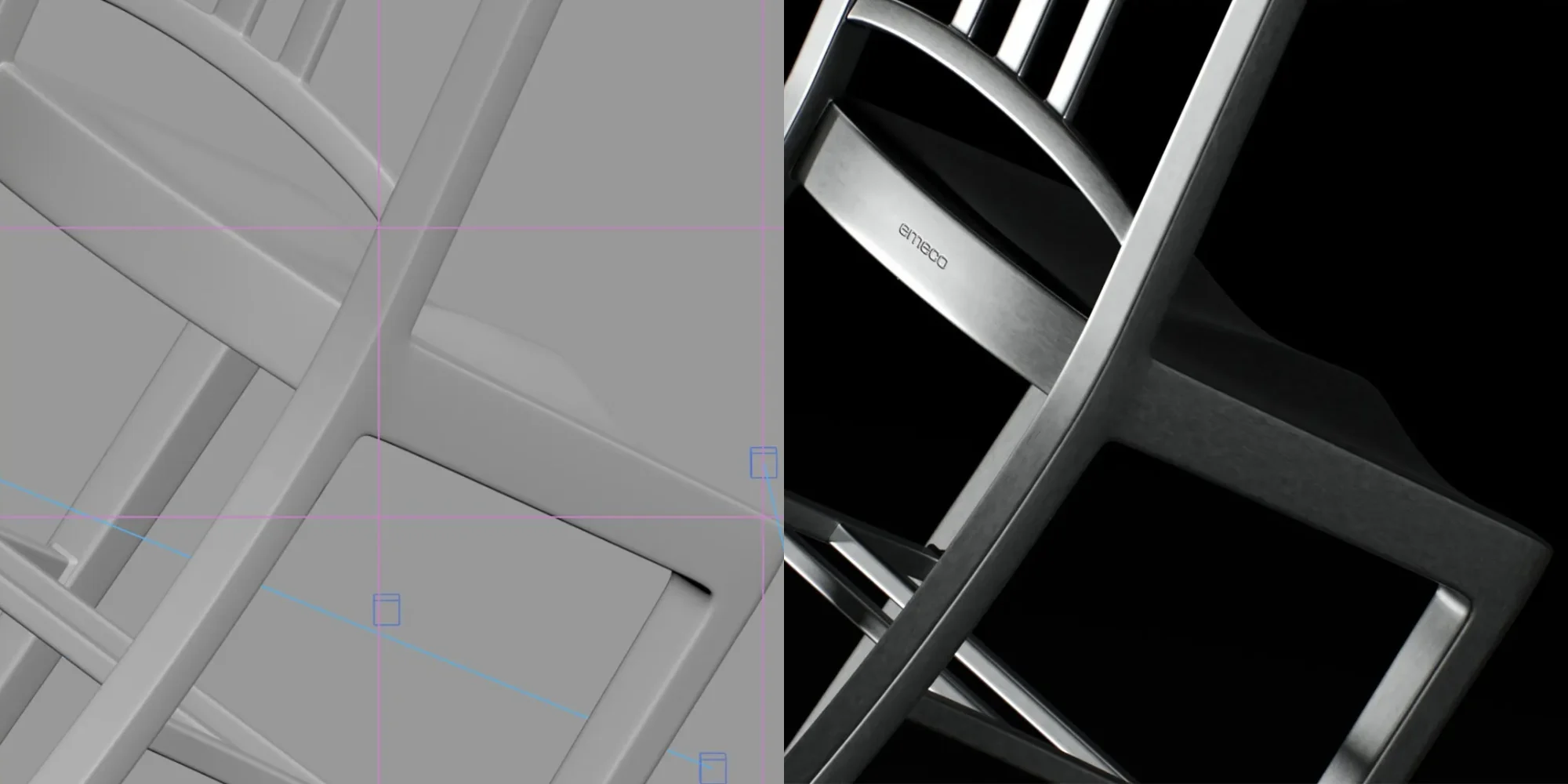
A typical furniture rendering project takes two to three weeks. You send a brief and your product data, get a quote, pay a deposit, and receive the first draft after about a week. Then come two rounds of feedback, and the final images. Here is how each step works and what I need from you.
Step 1: Brief and available materials
Every project starts with a brief. I want to know what images you need, where they will be used and when you need them. Then I ask what you already have, because it decides how the project goes:
- Do you have a 3D model or CAD files of the product?
- If the product already exists, do you have photos of it, including close-ups of materials and details?
- Are there material samples, such as fabric swatches or finish samples?
- Do you have references for the look you want?
The more of this you can send, the faster the project goes and the closer the first draft is to what you imagine. If you aren't sure what you have, send what you can and I will tell you what is missing.
Step 2: Quote
Based on the brief, the available materials and the time frame, I send a quote. The price depends mainly on the number of images, the complexity of the products and the number of pieces in the scene. You can see typical ranges in my article on how much furniture 3D rendering costs.
Step 3: Deposit and source files
When you accept the quote, I send an invoice for a 30 percent deposit. After it is paid, you send the final source files and production starts. The remaining 70 percent is invoiced after delivery.
Step 4: Production
In the first week I prepare the model, build the materials and set up the scene and lighting. I often rebuild the model even when you send me one in 3D. I want it to have clean geometry and topology, so I can keep working with it for variants, later changes and animation. This is the stage where good source files save the most time.
Step 5: First draft (after about one week)
You receive the first draft as a PDF. The images already have the materials and lighting set, not rough clay previews, so you can judge the real look. I usually send several options for camera angles and lighting, so you can choose the direction you prefer instead of guessing.
This is the most important moment of the project. It is where we catch things like a wrong fabric, a missing detail or a better camera angle, while they are still easy to change.
Step 6: Revisions
You send feedback, I make the changes and send the second draft. Simple white-background projects normally have two revision rounds. Interior scenes and more complex projects often have three. Changes to the model or the scene are part of these rounds, and any round beyond them is quoted separately.
The pace of the project depends a lot on how fast feedback arrives. A quick answer saves days.
Step 7: Final delivery
After the last approval I deliver the final images in the format and resolution you need. The rest of the invoice is due after delivery.
Typical timeline
| When | What happens |
|---|---|
| Before week 1 | Brief, quote, deposit, source files arrive |
| Week 1 | Model, materials, scene setup, first draft |
| Week 2 | Feedback and second draft |
| Week 3 | Final feedback and delivery |
For a simple white-background product this takes two to three weeks. Interior scenes and projects with many products take longer.
What slows a project down
The most common problem is weak source material. If the product already exists but I have no photos of it, I can't match colours and details. If the CAD files are incomplete, I ask you to fill the gaps before production continues. In both cases the project waits until the missing material arrives, and every day of waiting moves the delivery date.
The second most common cause is slow feedback, which stretches a two-week project into a month.
FAQ
How long does a furniture 3D rendering project take?
Two to three weeks for a simple white-background project, depending on how quickly feedback comes in.
When do I see the first images?
After about one week, as a PDF with materials and lighting already set.
How many revision rounds are included?
Two for simple projects, usually three for interior scenes and more complex ones.
What do you need to start?
A brief, CAD files or a 3D model, photos of the product if it already exists, and material samples or references.
How does payment work?
A 30 percent deposit after you accept the quote, and the remaining amount after delivery.
What if I only have photos and no 3D model?
That works. I model the product from photos, but I need its dimensions. Send photos from several angles together with the measurements, and I will include the modelling in the quote.
If you have a project in mind, send me the brief and what you have through the contact page.
Peter Janov is a 3D visualization artist and architect who has been creating furniture and interior renders for international manufacturers for 12 years.